
Why Kamala Harris Lost
Progressives say it's because she was too moderate; moderates say it's because she was too far left. They're both wrong. My grand unified theory is right.

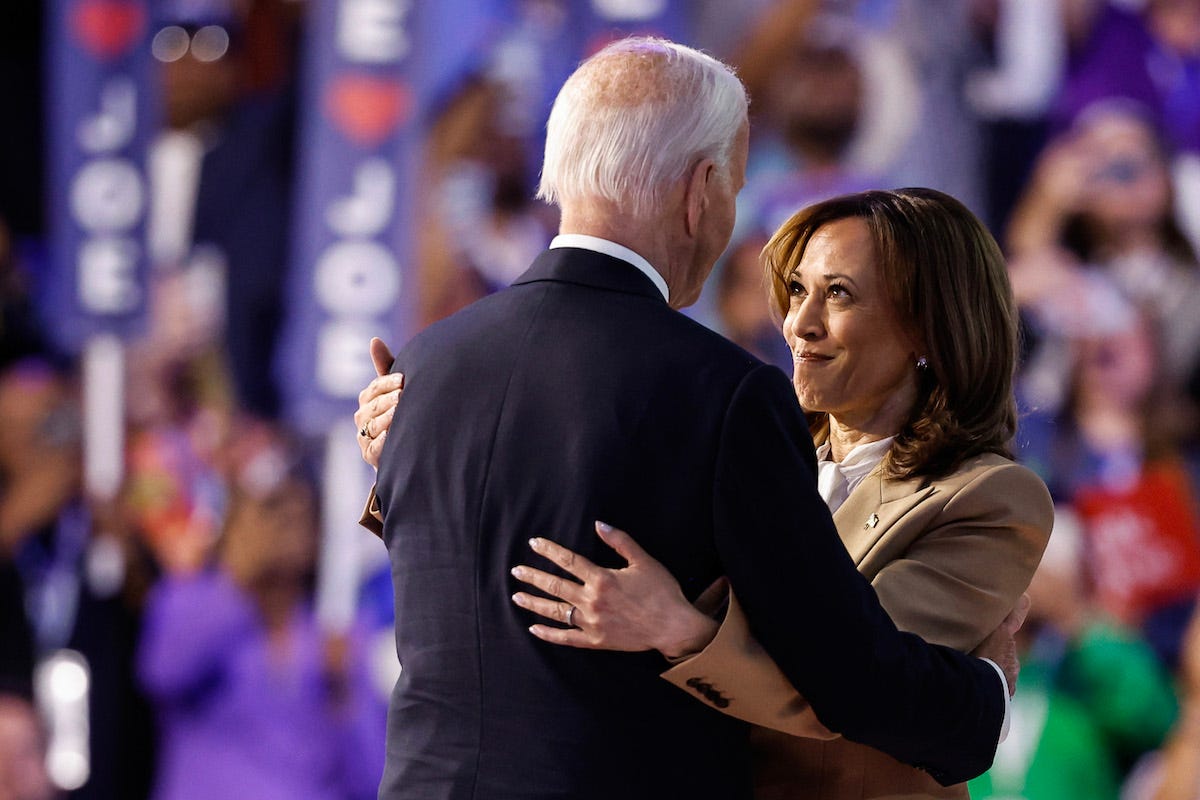
The left and center will never come to agreement on why Kamala Harris lost the 2024 election, in large part because both factions would like to deploy her defeat as a kill-shot against their rivals. If Harris lost because she was too progressive, that discredits the left; if she lost because her pivot to the center failed, that discredits the center.
We’re forced to speculate over why the DNC decided to bury its after-action report on the election, but one reason may be this unbridgeable divide. The stories that factionalists have conjured about how Harris came up short are incompatible with one another, and, thus, impossible to synthesize. If Democratic Party officialdom were to choose a side, one faction or the other would view it as betrayal.
Perhaps it’s for the best, because these stories are defective, too. Indeed, this fight is so tedious because, in imagining the political effects of their preferred agendas and reasoning backward, factionalists reach hypotheses that do not fit observable facts.
Progressives note that Harris:
eschewed left wing policy positions during her campaign;
lost.
Moderates reply that Harris:
adopted left wing policy positions in the Senate and her first presidential primary election;
lost.
There’s more to both arguments, and I’ll fill them in as we go, but that’s the nub of it. Reductive in the most cartoonish way. Especially so because Harris’s defeat was overdetermined. In various scenarios she could have: swung left and lost by more, swung left and fared the same, swung left and lost by less, swung left and won OR swung further right and lost by more, swung right and fared the same, swung right and lost by less, swung right and won. In a narrow race, all variables loom large.
The good news is, there’s another way to assess the party’s failure in 2024 that does no harm to anyone’s sacred policy cows. We just have to start over with the available facts, and tell a story that fits all of them, without having to add asterisks to the inconvenient ones.
SHE’S GOT ISSUES
A theory of defeat doesn’t have to turn on campaign tactics at all. One could argue that Harris oversaw an optimal campaign, and was just running in a global political environment in which victory for the incumbent party was impossible, or in which she was doomed by her race and gender rather than her tactics1.
I actually think this theory is closer to the mark than ones that hang entirely on position-taking. But, again, she lost very narrowly to an unpopular criminal whose first presidency failed. And, of course, it’s a bit too convenient. Who’s to blame? It turns out, no one!
More persuasive would be an explanation that’s both introspective and accounts for everything we know, including data points that seem to cut against one another. For instance: