
Trump Switching Sides In The War He Lost Does Not Make Him A Palestinian Liberationist
Inside the mailbag: Secret Service ... Tim Kaine ... Kash Patel

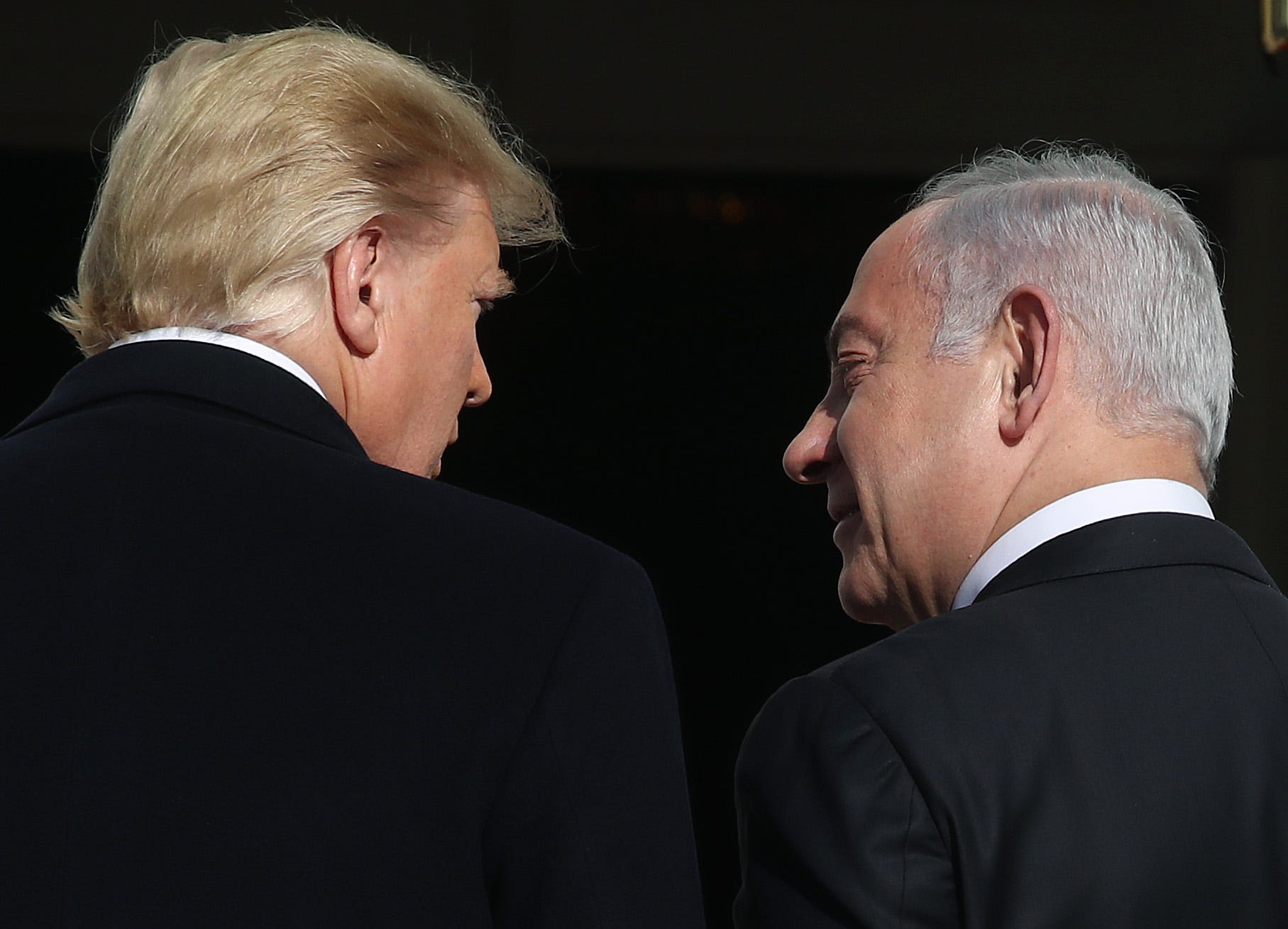
Quick observation from me up top, and then we’ll get to your questions. I haven’t written at length about the developments in Iran this week, or offered bullet-point thoughts, for three simple reasons: the president and his advisers aren’t trustworthy; the peace deal they’re treating as fait accompli isn’t a peace deal; and it doesn’t describe a stable detente. There were three belligerents in the war and this is a memorandum of understanding between two of them. So let’s wait and see.
What I have said, and what I believe, is that the MOU contemplates an offramp that the U.S. really should take, but that’s also tantamount to surrender. In other words: Donald Trump started an illegal war, lost it almost immediately, then let it fester for months—the result is thousands of dead Iranians, including over 100 schoolgirls, 13 dead Americans, countless injured, and trillions in lost wealth around the world. On that record, Trump should resign the presidency in disgrace.
There are some liberals and progressives who are squeamish about bludgeoning Trump with the truth here; they worry he’ll experience it as ego injury and restart the war. That is a reasonable concern, though I don’t share it. I explained in this article why I believe we must treat him as an adult with real agency, and stop insulating him from the consequences of his failures.
There are also a minority of Democrats who believe the MOU is so bad that we’d be better off back in the unsteady stalemate of the status quo ante. They are wrong, I’d even say foolish, for believing anyone anywhere in the world would be better off with Trump leading an active military campaign.
But I live in the world of discourse, so I want to focus on a line taking shape on the left, that verges on feigning Strange New Respect for Trump and JD Vance. It’s driven, I believe by a mix of sincere and cynical concerns. Sincerely: that Trump will try to reclaim the antiwar mantle by singling out pro-war Democrats, and that (by throwing Israel under the bus) he’ll benefit from the anti-Israel sentiment raging throughout the world. Cynically: that by taking Trump’s fraudulent new anti-war, Israel-critical posture at face value, they can forge an alliance of convenience with MAGA to crush AIPAC and Israel and the hawkish element of the Democratic Party.
See here, here, here, and here.
I will use all my persuasive power to marginalize Dems who want the MOU to fail, and who still believe Israel deserves moral and political support from American liberals. But this is a weaselly game that requires us to take leave of our object permanence. To forget both who started the Iran war, and the atrocities Trump uncorked in Gaza after his inauguration, by giving Benjamin Netanyahu a freer hand than he had during the Biden presidency.
Trump is the belligerent here, as well as a liar and a snake. He is not “anti” the war he started, and deserves no kudos for adopting this new rhetoric relative to anyone except maybe a subset of right-wing hawks who genuinely want the war to resume. He may become “anti-Israel,” but not because he’s become a Palestinian liberationist—he wants to transform Gaza into a Trump-branded resort, and reserves “Palestinian” as a term of abuse for insufficiently pro-Israel Jews. No, he’s lashing out at Israel because, a) he blames Israel for convincing him to participate in this disastrous war; and b) rather than lose the war, he’d rather switch sides. He wants a cut of the wealth that will be unlocked by normalizing relations with Iran, and to more firmly establish an international alliance of petrostate authoritarians.
He needs to be held accountable for all of this, and constrained going forward, but if people on the left insist on running cover for him, he’ll wriggle out, once again, and we’ll get more illegal wars when the dust settles.
Max M.: Like many, I find it maddening that elected Democrats’ messaging draws such a hard line between “kitchen table” concerns and mere “democracy” issues, viewing the former as “good” talking points and the latter as too “abstract.” Democracy is, and always has been, an economic issue. If the government doesn’t have to worry about losing your vote, they don’t have to worry about your economic plight; that’s why authoritarian nations rarely enjoy thriving economies. I took me all of one sentence to draw that connection. So why is it so hard for Democratic candidates to put two and two together for the voters? Is the consultant class privy to some additional considerations that I’m missing?
I’m not even convinced their underlying political instinct is correct! Republicans won more elections than not for the first half of my life on campaigns of abstraction for liberty and freedom. People find these concepts emotionally resonant, especially when politicians are passionate about them, or at least convincing actors.
But consultants are paid for strategic advice; their job is to help their clients win elections, not to help one side of the aisle save the country, or set discourse in a way that gives them the most running room to govern in the future. This is fine as far as it goes, but we need to be clear that, from the consultant’s perspective, the game isn’t just to win, but to be held blameless in defeat.
If they dispense advice and their clients go on to lose campaigns, their livelihoods are suddenly at risk. This creates an incentive for them to provide risk-averse advice, and justify it in terms that seem quantitative, almost scientific. If their clients lose, they want to be able to argue that their campaigns were optimal—it was just a bad cycle, and they were running into the wind.
So they compile data and anecdata. The anecdata say Joe Biden tried to save his presidency with speeches about the threat to democracy, and it didn’t work. Kamala Harris likewise ran against Trump as an aspiring dictator, and it didn’t work. The harder data say that when you ask voters what issues concern them the most, they rank democracy below the economy and immigration.
Ergo, candidates should run on the economy—and if they’re going to make appeals to democracy or anti-corruption or anything else distant or abstract, they should draw a straight line from them to voters and their wallets.
A few observations:
This is not science; it’s not even verging on science. It’s people trying to make friends by conducting polls—a strategic approach that has produced zero prom kings.
If the distinction in their minds is between materialism and abstraction, they should ask themselves how immigration crept up the list of voter concerns. The median voter who lived through Joe Biden’s presidency experienced zero obvious immigration-driven changes to their communities. They did see a lot of TV news and social media clips about invading hordes, and they did hear a lot about how Biden’s Open Borders™️ had allowed America to be invaded. But outside of border communities, most places changed in normal ways, and many of the places that saw influxes of immigrants were grateful for it. Nevertheless, the issue achieved salience.
If tying issues to kitchen-table concerns was essential to shaping public sentiment about them, immigration would be a slam-dunk issue for Democrats, because immigrants make America richer, make Social Security more durable, etc etc. Republicans do make voters more hostile to immigration by lying about the supposed “public charge” problem, but the field is only clear for them because Democrats abandoned it in favor of antiseptic issues like prescription drug prices, which poll well but excite few people.
Many, though not all, political data analysts have a weak understanding of how public opinion takes shape, and don’t incorporate theories of emotion or social contagion into their thinking. They ask voters open-ended or forced-choice questions in controlled settings, and find that—surprise!—most voters would feel better about the country if they had more money, and believe achieving a higher standard of living is more important than “democracy.”
For all of these reasons, they steered Democrats away from democracy as an issue, unless tethered in some way to things like prices or health care, and actually managed to allow Donald Trump, the world’s most dangerous enemy of democracy, to fight them to a draw on the question of which party poses a greater threat to our ability to choose our leaders.
As you probably gathered, I believe this is civic malpractice. But it does answer your question.
Now, as you say, if Dems insist on linking democracy to household economics, it isn’t hard. But I also think people can get good and worked up about questions of basic fairness without it touching their pocketbooks at all. And I’ve never understood why Democrats interpret their data to carry only forward looking and prospective implications (e.g., we need to save our democracy, because without it your economic circumstances will deteriorate). To me, the problem is here already, and the pitch is clear: Republicans have rigged our political system to the point where we can't reliably keep our promises to fix health care and build roads—we thus need to unrig the system first.
This strikes me as an appeal that would help Democrats convert persuadable voters and a useful reminder for Democrats of all factions. If you’re a moderate Democrat and you want to work through markets, you can’t regulate them without reforming democracy first. If you’re a democratic socialist, and don’t prioritize democratic reform, good luck enacting transformative legislation, and good luck upholding it in court.
Matt Colbert: If Donald Trump tried to drink raw milk, would the Secret Service have a duty to dive in between Trump and the milk to prevent it from going into his mouth?
A silly, even ridiculous submission, but it does give rise to some interesting philosophical questions about the ethical distinction between external harm and self harm, and the duty caretakers have to intervene against both.
The law requires USSS, and gives it authority, to protect the president from the former: from crimes, and accidents, and acts of nature that might injure him or cost him his life.
That’s intuitively very different than preventing him from making unhealthy lifestyle choices. Barack Obama would occasionally sneak out for a cigarette. It would’ve been insane for Secret Service agents to tackle him and confiscate his smokes every time they caught him lighting up.
But these two categories can come pretty close to merging.