
Surrender To The Left On Medicare For All
It's better than tearing the party apart!

From today until morale improves, my main political commitment will be eliminating the scourge of wimpy politics that has come to define the Democratic Party.
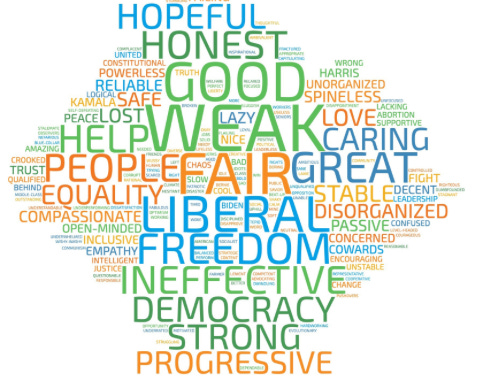
That’s how Democrats will regain the trust of their own voters. It’s also essential for the survival of liberal pluralism. There will be no recovery or rebuilding from the Trump era if Democrats are too fearful to wield power confidently.
But that’s about partisan politics—how best to beat Republicans and revive democracy in America. At the moment, the Democratic establishment is agonizing internally over whether and how to fight the leftist operatives and candidates building power within the party. In a sad irony, that’s the one ground where certain moderate Democrats are willing to show fight.
But if Democratic leaders and frontline members actually want to marginalize the new new left as a political faction, they would ironically be better off demonstrating a bit of intra-coalitional weakness and surrendering to progressives on the issue of Medicare for All.
Maybe not by committing to every letter of Bernie Sanders’ Medicare for All bill; and maybe not by proposing an immediate rather than gradual transition to Medicare for All. But on the concept and the goal: That the uninsured rate in America should be zero, at least among U.S. citizens, and the government should guarantee it.
There’s no news peg for this article. It’s just something that’s been on my mind for a while. Medicare for All is arguably the main propellant of the American left. Sanders thrills already-progressive people with his class critique of U.S. politics, but truly universal health care is the appeal that draws mainline liberals into the Sanders faction. If Obamacare had been Medicare for All, or had at least included a strong public option, it’s hard to imagine Sanders building the movement he did. Neutralize that issue and the left will have a harder time sustaining and growing the same movement after he bequeathes it to successors.
Progressives vie for influence within the Democratic coalition by asserting that class-based politics would deliver Democrats an unbeatable multi-racial coalition of working Americans. It would be great if this were true, but the evidence for it is thin; what is true though is that if Democrats embraced class politics particularly on the issue of health care it would reduce friction significantly within the broad and fractious left.
And, if undertaken with care, it could be done in a way that pleases the broader public, too.
This isn’t a breezy suggestion, and it’s not a small ask. It may seem breezy, because I support Medicare for All as a policy objective. And it may seem small, insofar as some congressional Democrats only oppose Medicare for All because they’re scared of backlash, or because health-industry CEOs and corporations fund their campaigns. But the real inertia in health policy isn’t entirely or even mostly a byproduct of big money in politics.
Speaking very broadly, and on the basis of rhetoric, the left does not really grasp the existence or nature of community-level skepticism of Medicare for All—or really any significant health-care reform. They caricature health-care politics as a simple battle between the worst executives in the country and the little guys, all of whom naturally support Medicare for All as a matter of common sense. Or so they imagine.
But this is not close to the truth. It is why, in a world where the Democratic establishment agreed to let the left take the lead on the health care issue, the left would have to make a big concession of its own: The fantasy version of Medicare for All, where we go to the doctor whenever we need to and never have to touch our wallets, is not a system progressives could create overnight, or even in the span of a presidential term—if only moderate Democrats would get out of their way.
They would have to open their minds to subtle political complexities, and open their hearts to dreaded liberal technocrats.
This is why I think it’d be genuinely useful for more young leftists to spend a year or two covering district-level congressional politics as journalists. The complexities of all politics, but particularly health-care politics, become much more apparent from the vantage point of a disinterested observer.
The root of it is that there aren’t enough health-care resources at hand to pass the Sanders plan and expect everyone to be thrilled. We currently spend enough money as a society on health care to afford a universal system, but redistributing that money straight away would create losers relative to the status quo, not just winners in the form of newly and securely insured Americans. By the same token, spending as much money as the Sanders plan envisions would require significant tax increases, and would run into resource constraints: who’s going to provide all this new health care, with what, and where?
An easy way to grasp the challenges these dilemmas create is from the perspective of a generic congressional representative. Every district has at least one hospital, but most have several. Some of these are owned by large hospital corporations. Others are community based. But when Congress debates health-care reform, resistance doesn’t arise entirely from trade associations and lobbying shops in Washington. The executives, physicians, nurses, lab techs, and orderlies, who are for the most part just regular constituents, become…concerned.
Not necessarily opposed. There is, obviously, no shortage of right-wing doctors and hospital executives (and nurses and techs and orderlies) who oppose universal health care for the same reasons Republicans do. But you’ll also find plenty of progressive health-care providers who hate that members of their communities are uninsured. Doctors of all political persuasions would, for less charitable reasons, be relieved not to haggle with multiple insurance companies over procedures and billing.
They have other concerns, though: They don’t want their hospitals to become overrun all of a sudden—insuring 30 million uninsured people doesn’t magically increase the capacity of the health-care system. And, of course, few of them want to accept a pay cut. This attention to self-interest isn’t the loveliest of human qualities, particularly when we’re talking about six-figure earners in working- or middle-class communities. But it’s also completely understandable, nothing at all like the villainy of health-insurance corporations.
And so when Democrats in Congress convey misgivings about Medicare for All, it’s often because some of the most sympathetic and respected members of their districts have expressed alarm. And that’s just the baseline. It doesn’t account for the fact that most people are already insured, and most of them are basically fine with the health insurance that they have. Or that a lot of pharmaceutical and medical-device manufacturing takes place in blue districts.
If implementation doesn’t take these concerns into account opposition will be severe, backlash will be furious, and the law may not survive.
But accounting for these challenges, the politics of health-care reform don’t have to be as grueling as they’ve proven in the past. A more gradual transition would give hospitals and the broader industry time to build out capacity, and would allow physicians to evolve away from the current system rather than face immediate pay cuts.
A unified party could pass and implement Medicare for All (or a Medicare-powered public option that would become Medicare for All over the course of a few years) with reasonable ease, particularly if they were willing to move quickly.
Medicare for All is already popular as a generic concept. If the Democratic Party unified behind it, its popularity might actually increase, and it would maintain support more durably than (say) the Affordable Care Act, as Republicans weaponized the details.
I would call it “Open Medicare,” rather than the unwieldier “Medicare For All Who Want It.” For it to land well politically, everyone across the party would be well advised to cooperate in describing it as a common sense reform rather than as radical change. And they would be wise to root the appeal in terms of both fairness and partisanship. People in the richest society in history shouldn’t suffer or die because they can’t afford health care. And we can’t always be one election away from Republicans throwing 30 million people off their health plans. Ergo, we need to get as many Americans as possible integrated into the same insurance system.
If they did that, and legislated quickly, they’d accomplish something everyone in the party could be proud of, and the factional health-care fight would lose most of its force. Left-wing leaders would have to attract new supporters with other appeals.
They do have other appeals, of course. But none has the lasting, broad, emotional draw of universal health care.
Climate change has deep emotional resonance to politically engaged progressives, particularly young ones. But the Green New Deal does not strike the same chords with the general public, particularly when unemployment isn’t near crisis levels. And as the reality of climate change becomes impossible to deny, the politics of rapid decarbonization ironically become more of a trap. The imperative to do something feels stronger, but the returns on policy do not feel like progress. They feel instead like the slowing of deterioration. We’d tax fossil fuels and disrupt settled arrangements—and still get blanketed in smoke or pummeled by increasingly severe weather. It’s the politics of underpowered economic stimulus: Think how much worse things WOULD have been if we’d done nothing. A recipe for people to lose heart.
Clean-energy investment, by contrast, is essential to both mitigating the severity of climate change and making life in a hotter world more stable and tolerable. But there’s already a lot of common ground between left and center on that point.
The left and the center can fight forever over the federal minimum wage, because shifting goalposts is trivial. Want to be the most progressive candidate in a race? Add a dollar or two to the minimum wage your opponent supports, et voilà! But the salience of the issue has shrunk. Something like 90 percent of workers already earn more than $15 per hour; and only about one percent of workers earns the federal floor of $7.25 per hour, or less.
By contrast, I suspect the left and center can come to terms on taxation and questions of oligarchy. Between the conduct of the tech-elite in the Trump era, and the genuinely precarious macroeconomic situation Trump will bequeath his successor, there will be a larger-than-usual appetite in 2029 for taxing the bejesus out of the ultrawealthy. For similar reasons, Democrats across the party have found they can’t in good conscience, or for any strategic purpose, offer unqualified support to Israel.
But health care touches everyone; the health-care policy divide between left and center remains quite large; and the left has the better of the moral argument. As long as that gap remains, a liberal electorate desperate for clarity and vigor will increasingly align with candidates who support Medicare for All. The best way to close that gap is to close it.
With the valence of its most resonant issues diminished, the left will find itself standing for more marginal priorities, or things that are too radical to appeal broadly. They will thus pose a decreasing threat to the party mainstream over time. If that’s what the Democratic establishment really wants, this approach seems sounder than intensifying factional war, and tearing the party apart.
Let's talk health care - music to my ears (after spending my career in health policy).
My perspective is not to talk about Medicare for all, but to talk about Universal Health Care (not coverage - coverage brings up issues over what is covered). As most of you know, there are many different systems around the world that achieve Universal Health Care; Sanders' Medicare for All is just one way to achieve the goal. If, instead of getting bogged down in the details, we focus on the goal itself, I believe there would be much more buy-in.
We have to keep it simple - acknowledge the need, commit to getting there, and discuss concrete goals.
I believe the goal rings true in the hearts of even the most moderate of Dems - this does not need to be a divisive issue if handled correctly.
I like this overall idea.
M4A/Open Medicare/whatever could provide the one true "tentpole" we've been needing for the whole big-tent approach. You can basically say, "As long as you're on board with this, you're a Democrat, and everything else is OK to buck party orthodoxy about". It's a way to welcome people back into the tent, offering both reconciliation and absolution.
And it could end up lessening the salience of odious Omnicause litmus tests by offering up one big litmus test that always has one glaringly obvious answer.
However, I do want to raise a couple notes of caution.
1. The elephant in the room is the way that Pelosi hijacked Obama's presidency by forcing healthcare reform on him. It was the wrong move because of the broader economic crisis at the time, and it really undermined our entire political movement for voters to see us obsessing about the wrong thing at the time. And depending on how things go in the 2028 cycle, we may end up needing to have the flexibility to postpone a M4A push until after we can de-Trumpify the country.
2. As you note, we can't do M4A unless we dramatically expand the supply of doctors. But what often gets lost on pundits -- almost all of whom have never tried to get into med school -- is that the financially toxic nature of residency is what gives the AMA so much leverage for its members to continue endorsing their policy of restricting the number of residency slots. You spend 4 years paying undergrad tuition, and THEN another 4 years paying even MORE outrageous med school tuition, and it can EASILY come out to at LEAST half a million dollars in debt. That debt comes immediately due during residency, which has publicly-set salary rates that are INSULTINGLY low (avg $68-71k), and you're forced to endure that for the next 3-8 years of your career. Which most likely means that you're going on IBR/forbearance for that duration, so the debt piles up even MORE.
So by the time you're done with residency, you're SICK of a decade-plus of forced poverty, and you are going to have ZERO patience for any salary that doesn't IMMEDIATELY (1) cover your full loan payments, and (2) provide the upper-class lifestyle you were promised at the start of all this. Which all means starting salaries in the lower-mid 6 figures, which is something that can ONLY be provided by a supply restriction inflating their wages.
In order to solve all this, you basically have to restructure the entire medical education system AND make-whole all the people currently suffering under it, which is a demographic that spans all the way up into the age-50 bracket (IE those still paying their loans off).