
The Revisionist History Of Trump's Impeachments
No, they did not help him.... but they could've hurt him more.

Democrats remain favored to win back control of the House in November, but after state-level GOP officials stole several seats on Donald Trump’s orders, it’s shaping up to be a more closely run election.
Party officials are thus wrestling with the questions of how to win power and what to do with it. This has led them inexorably to familiar arguments: over the proper balance between investigation and legislation, and then over the value of the impeachment power. The party’s grassroots wants oversight and accountability, but the party’s leaders and strategists, as always, believe promising conflict with Trump will backfire.
That’s why Hakeem Jeffries visited Fox News recently to reassure its viewers: Democrats view impeachment as a distraction. “I’ve made clear from the very beginning that our top priority is going to be to drive down the high cost of living,” Jeffries said.
At very least, Jeffries wants the public to believe there will be no impeachment, and little in the way of oversight, because Democrats will be so busy lowering costs. They believe an appeal along these lines will help them win the largest possible number of seats.
And yet the balance contemplated in the Constitution is something like the inverse of this. Politicians and parties have a lot of leeway, but the framers did obligate them to a few tasks, and protecting the country from a tyrant is one of them. Democrats should commit, in their hearts if not in their words, to aggressive oversight that will likely shake loose proof of impeachable offenses. They should do this because the public has a right to know, and because it is literally the most explicit part of their job—the one task they swear an oath to complete.
We may not like this. We may feel their duties should stem from their campaign promises rather than their oaths of office. But the congressional oath does not actually obligate members of Congress to pass bills to lower prices; it obligates them to “support and defend the Constitution of the United States against all enemies, foreign and domestic [and] bear true faith and allegiance to the same.” That’s it. The Constitution says a president shall be impeached and removed for high crimes and misdemeanors, and members bearing true faith and allegiance to the Constitution must thus endeavor to impeach and remove Trump.
If all this strikes you as exceedingly literalistic, I hear you. I understand that members of Congress must win elections before they can govern, which means they also must contemplate the electoral consequences of various public appeals. If campaigning aggressively on impeaching and removing a faithless president makes it less likely that he will be impeached and removed, it is a breach of duty at some level to appeal to voters in that manner. Likewise, we can’t wish away complicit Republicans. If they intend to render the removal power a dead letter (against Republican presidents, at an rate) then Democrats have to proceed under the assumption that Trump will not be removed at any point. This reduces the value of a Senate trial, and maybe even the formal House vote to impeach.
And so I have some sympathy for the idea that, under present circumstances, the juice isn’t worth the squeeze.
What I do not have sympathy for is the idea that Democrats should be fearful of asserting that Trump ought to be removed from office. That the Constitution indeed compels his removal, but his Republican allies and enablers in Congress are protecting him from this rightful fate.
And so whatever Democrats choose to do with their power next year—whether they choose to impeach Trump, or merely gesture toward the idea that he should be removed, or abdicate their obligations altogether—they should do so in full view of the following two facts:
Impeachment makes oversight easier—on paper and likely in reality. Congress is at its highest ebb of compulsory power when it is contemplating the impeachment and removal of officers of the United States.
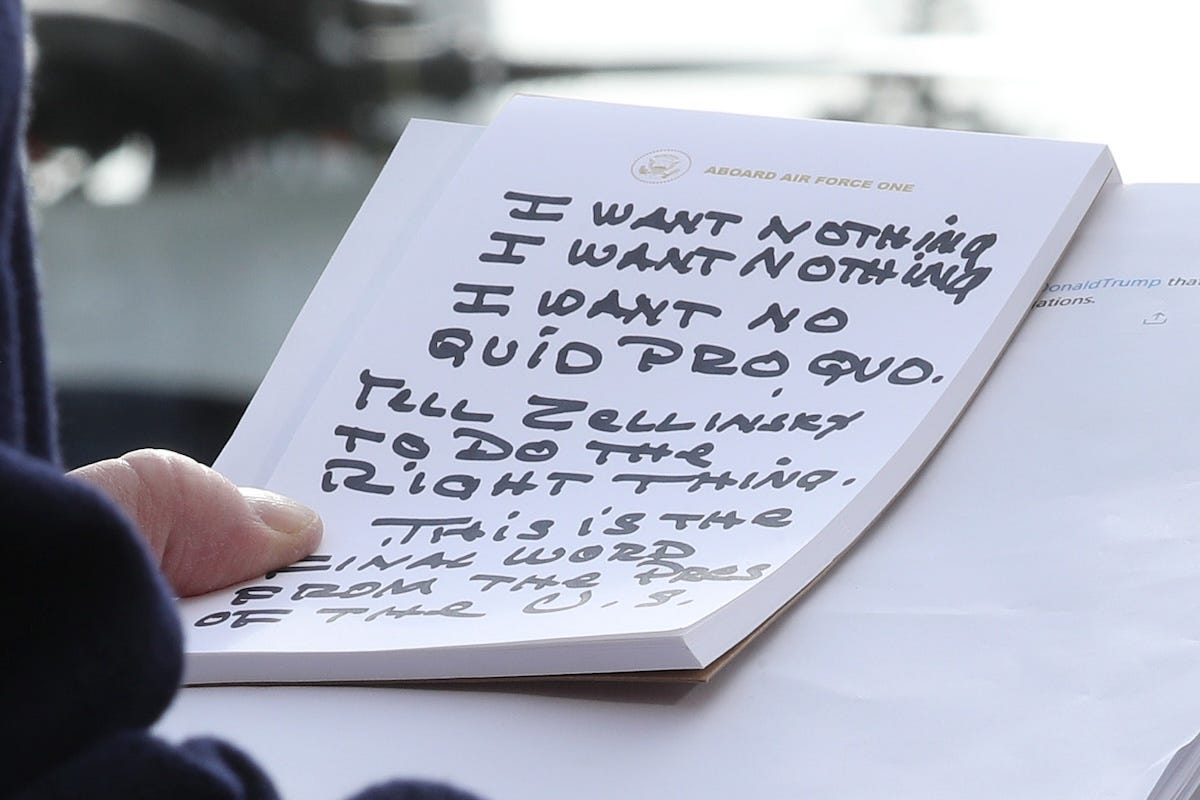
There is no evidence that Trump benefited in any way from either of his first two impeachments. And because Trump is even less popular now than he was during those impeachments, there’s no reason to fear that he’ll benefit from a third, fourth, fifth, or sixth.
Let’s start with that second fact, because it’s what’s driving Democratic misgivings about impeachment. The idea that impeachment produces a rally-around-Trump effect.