
The Case For Billionaire Realism
We can quibble with each other over the usefulness of class-warfare rhetoric—but conflict is inevitable.

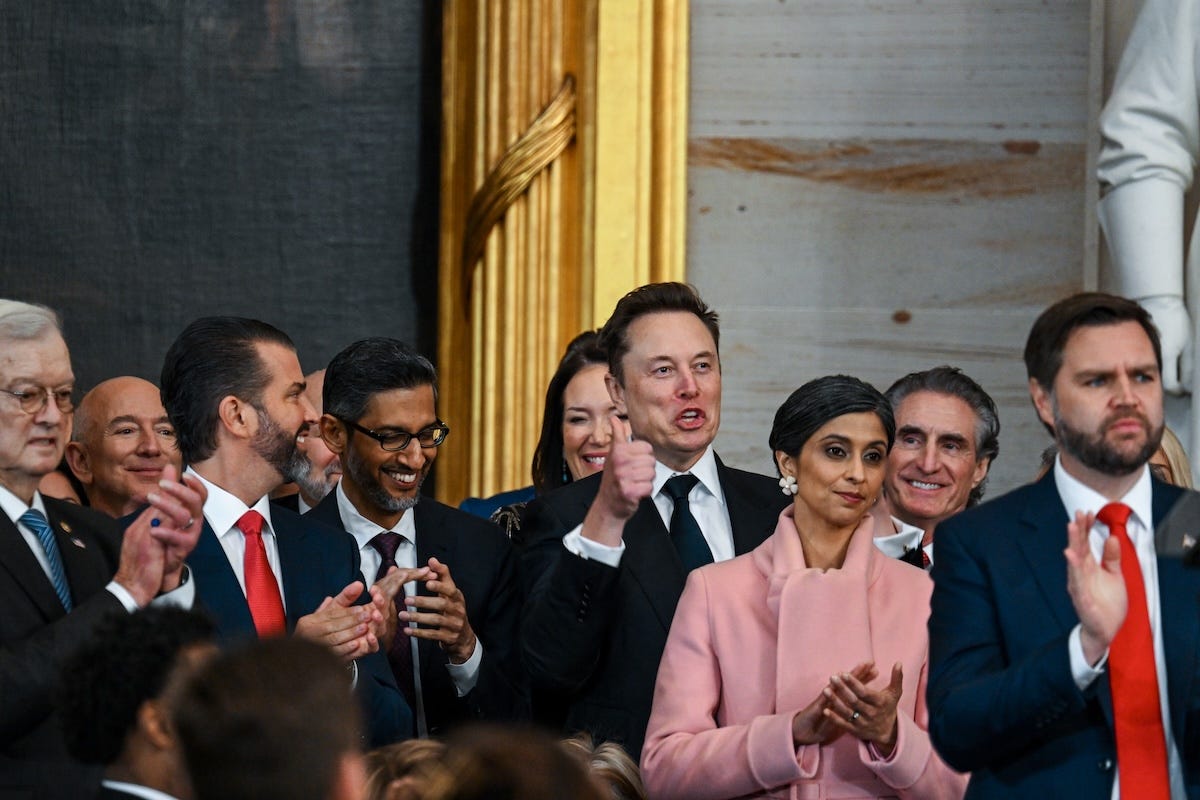
Is it possible to coexist with billionaires, as a class, in a democracy?
Most progressives would answer this question “obviously not.” Some have thought long and hard about it, others simply echo in-group rhetoric: “Every billionaire is a policy failure,” “eat the rich,” “no ethical billionaires,” etc. But the consensus on the left is very strong.
It’s not so strong across the remainder of the political spectrum. Republicans love billionaires (though in the Trump era, they’ll take aim at billionaires who don’t play fools to Trump’s crown.) And Democrats are divided. Some are vocally anti-billionaire. Some are pro-billionaire. And some have mixed feelings, but choose the path of least resistance in avoiding class-war rhetoric altogether.
I’m agnostic as to most of the rhetoric per se. None of those slogans offends or invigorates me. They exhibit the usefulness and shortcomings of all common political slogans. One might nitpick the use of nominal figures to circumscribe an economic class. But that’s petty. We say billionaires, because at the moment, the richest man in society has not yet amassed over a trillion dollars in wealth. During the Gilded Age, robber barons were millionaires. Today, they’re billionaires. In the future, we might say “every trillionaire is a policy failure.”
I am also aware that the claims aren’t literally true of every fantastically wealthy person in the world. But, again, rhetoric isn’t meant to be maximally precise. We say “no war,” though most of us aren’t committed pacifists. We say “No Kings,” though there have been benevolent monarchs in our time.
Moreover, the harshness is not meant to be taken personally. We should be able expect political actors advocating for their interests to have thick skin, even if they’re rich. I think I know myself well enough to say that the slogans of class politics wouldn’t bother me even if I earned or lucked into a billion dollars, used it to do good in the world, and nevertheless found myself on the receiving end of angry chants.
But as to the question—who’s right about billionaires, progressives, or everyone else?—the best you can say is that the answer is unsettled, though it’s hard not to conclude progressives have the better argument.
After the past year, progressives can point to vindication every which way. To Silicon Valley, and corporate America, and Wall Street, and Big Law. Leaders in those sectors have done exactly what Bernie Sanders warned us they’d do. His Fighting Oligarchy tour last year was an important and rare show of force against Trump and his patrons. It was also Sanders’s way of saying I Told You So.
The best rejoinder is to insist on sorting bad apples from good. #NotAllBillionaires and all that. One faction of the billionaire class is clearly rotten and drunk with power; it has used and continues to use money and influence to advance evil, selfish ends. But other billionaires don’t do this, and we could use them inside the tent, both for their resources, and to assure the public that Democrats aren’t anti-success, or anti-anything else that happens to be popular at the moment.
My response to that argument is: maybe—but the billionaires are going to have to sort themselves.
Whether we’re meant to take the goal of eradicating billionaires literally or seriously, we’re clearly past the point at which the community of billionaires as it exists can be cajoled into allowing the democratic process to unfold as intended, and then respecting its outcomes. There may be “good apples” who support democracy and redistribution and regulation and the rule of law—or who can at least make peace with those things. But the class has become over-mighty to a point where it needs to be disempowered as a class, and in ways many individual billionaires will resist viciously.
Intra-left division over billionaires, and what to do about them, gets muddled because it is to some degree a proxy for policy disagreement. A moderate Democrat might think billionaires have a baleful impact on U.S. politics, but view them as a lesser evil, because they also think the policy agenda for reining in billionaires will cause collateral damage. That the cure is worse than the disease.
It also gets muddled by the power of billionaires themselves. A fairly progressive Democrat might think billionaires have a baleful impact on U.S. politics, but view efforts to bring them to heel as counterproductive, because they’re too powerful to antagonize.
This thinking is fairly common left of center, and yet it simply restates the progressive theory of the case. In a way it concedes the whole argument to them.
Whatever your policy views, and whatever you think of American political discourse, it’s hard to dispute two assertions: