
Democrats Need A Vibecession Safe Space
Acknowledging the vibecession is bad politics. But ignoring it is a recipe for losing everything.

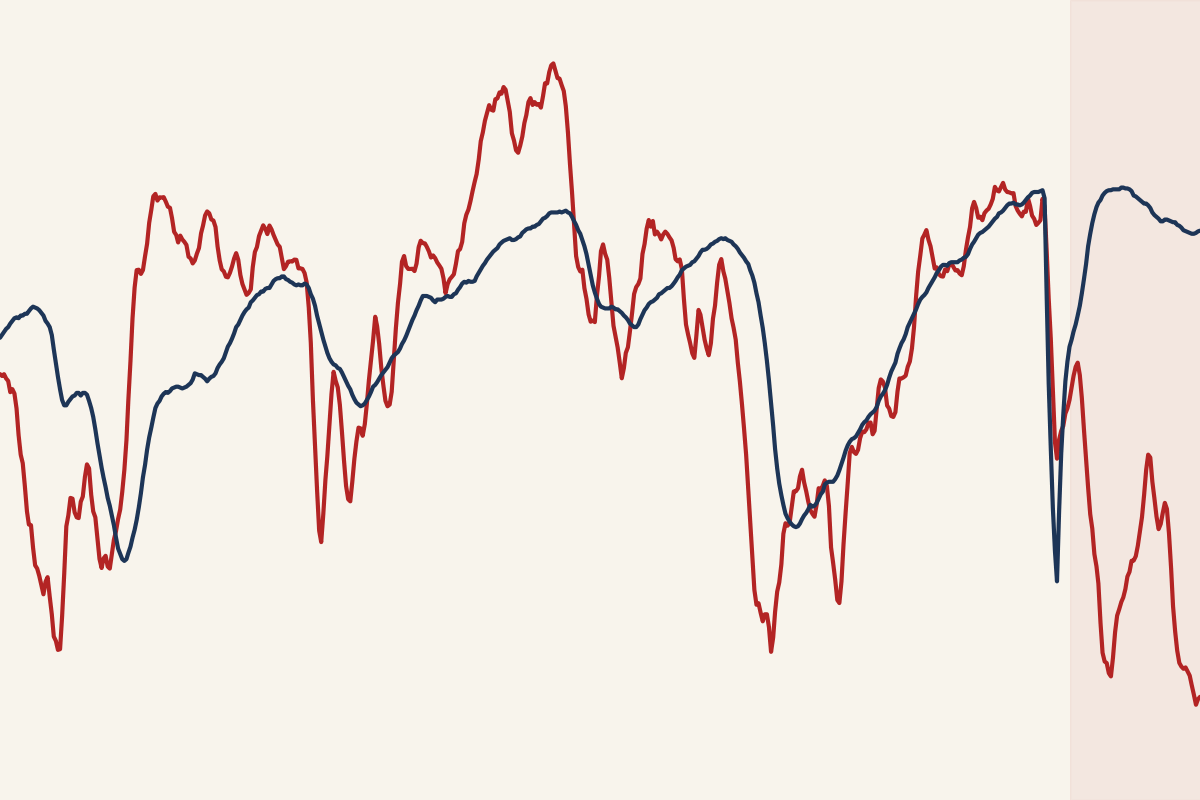
Between the DNC’s autopsy fiasco and Project 2029 recriminations, there’s been a ton of navel gazing lately (more even than usual) about how Democrats should poise themselves for a comeback. How they should resist the Trump regime today, or next year in the congressional majority, and how they should govern if they return to power two and a half years from now.
So I hope you’ll forgive me. I want to add one more suggestion from the cheap seats: As they plan and strategize for midterm elections in 2026, and for legislating and oversight in 2027 and 2028, and for winning the presidency—with all the white papers and talking points and investigative work that stuff will entail—Democrats should also dedicate real effort to understanding (and helping political professionals understand) the vibecession.
Not for the purposes of generating op-eds or congressional hearings or yet more white papers. But for their own survival, and the greater good of preserving liberal government for future generations.
Maybe by the time their work is done, it won’t be needed. Maybe the vibecession will end as mysteriously as it began, or some eminent political scientist or economist will produce definitive work on what leadened economic sentiment. Maybe by the time Democrats are governing again, the public will respond well to improving economic conditions, and poorly to deteriorating conditions, in the way theory and observation predicted they would right up until 2021.
But it’d be reckless to bet on the problem solving itself, and even more reckless to try to build the country back from fascism on a wing and a prayer that voters won’t immediately sour on Democrats all over again.
If you mention the vibecession on social media you should gird yourself for angry and defensive backlash.
Leftists hate the idea of the vibecession because radical change is unlikely unless masses are genuinely deprived and desperate.
Moderates are somewhat hostile to the concept as well, because their theory of politics depends on a predictable relationship between median macroeconomic conditions and voter behavior. It’s technocracy all the way down.
Democratic strategists loathe vibecession discourse, because positing that the public is factually wrong about what ails the country makes the job of pandering to voters (sorry, MeEtInG VoTeRs WhEre ThEy ArE) much harder, no matter which party is in charge.
Republicans are coming around to the idea of a vibecession, because the vibecession came for Donald Trump. Badly as Trump has governed, and notwithstanding all the economic damage he’s personally inflicted, it’s hard to explain why survey takers seem to believe we’re living through the worst economic conditions in modern history. But until about a year ago, Republicans mocked the idea that America was experiencing a vibecession, because shit-talking the Biden economy per se was useful to them.
Reactive as this topic seems to be, though, it’s critical that we get to the bottom of it in a dispassionate way. Whether your views hew toward the left or center, a mysterious inability to please voters by improving their economic conditions is a live torpedo aimed at everything standing between decency and fascism. The organizing suppositions of the Democratic Party establishment, the ambition of ascendant progressives, and, indeed, the very foundation of liberal governance.
Whether or not Democratic candidates and strategists are currently prepared to accept that public-opinion formation has changed in some fundamental way—and whether or not it’s wise for Democrats to muse publicly that there’s something off about economic sentiment—they should be engaged in research designed to understand what severed the tether between macroeconomic conditions and public sentiment, and how to refasten it.
They can do this quietly if they’d like, while publicly politicking against the Trump economy and profiting politically from lingering bad vibes. But if they can’t recreate the old conditions, under which good policy yielded political victories, and thus created an incentive to govern well, elections will turn on feuds and libels and culture war nonsense forever and ever. Democrats will get swept back out of power before they have time to build a new, more responsive government, and liberal society will disintegrate.
It is, of course, also important for economic analysts to examine and draw lessons from Joe Biden’s economic record, just as Biden’s team drew lessons from the shortcomings of Barack Obama’s economic record.